Figs For All Seasons
by Sandra Scalise Juneau
Remembering that first taste of fig set me on a path of nostalgia for the entwining of this luscious fruit, as woven within our Sicilian Heritage and Traditions.
According to both Old and New Testament scripture, figs symbolize abundance, prosperity and peace - the perfect metaphor for the hopes and visions of immigrants who left ancestral lands to resettle their families across America’s fertile landscape.
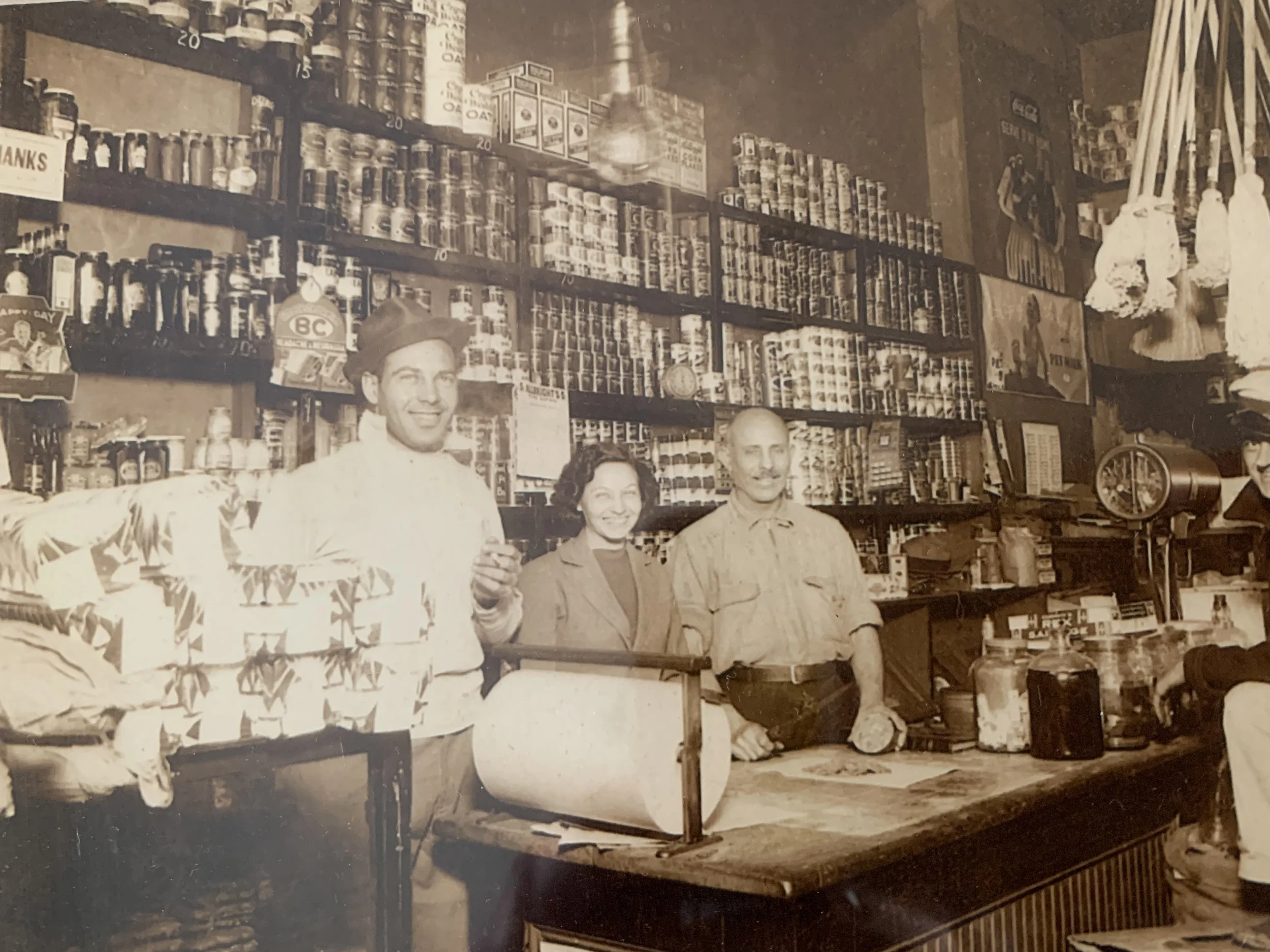
Scalise family grocery store
I was probably only about three years old, but each bite into a fresh fig takes me back to that first sweet taste. Set behind my paternal grandparents’ Scalise Grocery Store on the corner of Rampart and Euterpe Streets in New Orleans, the back of the house just off the kitchen was accented by a wrap-around gallery that led onto a small patch of land. In Summertime’s full bloom, this lush garden held a bounty that included round, ripe tomatoes, their heaviness held upright by staggered poles, interspersed with eggplants and peppers, and with a single fig tree bursting its fullness. I remember being at their white enamel kitchen table, with my two older brothers on either side, as Momma Scalise came inside with her garden’s treasures. From within the folds of her starched white apron she selected a perfectly ripe fruit, rinsed it at the sink, cut it into three equal portions, and presented it to us, like gems on a plate for us to enjoy!
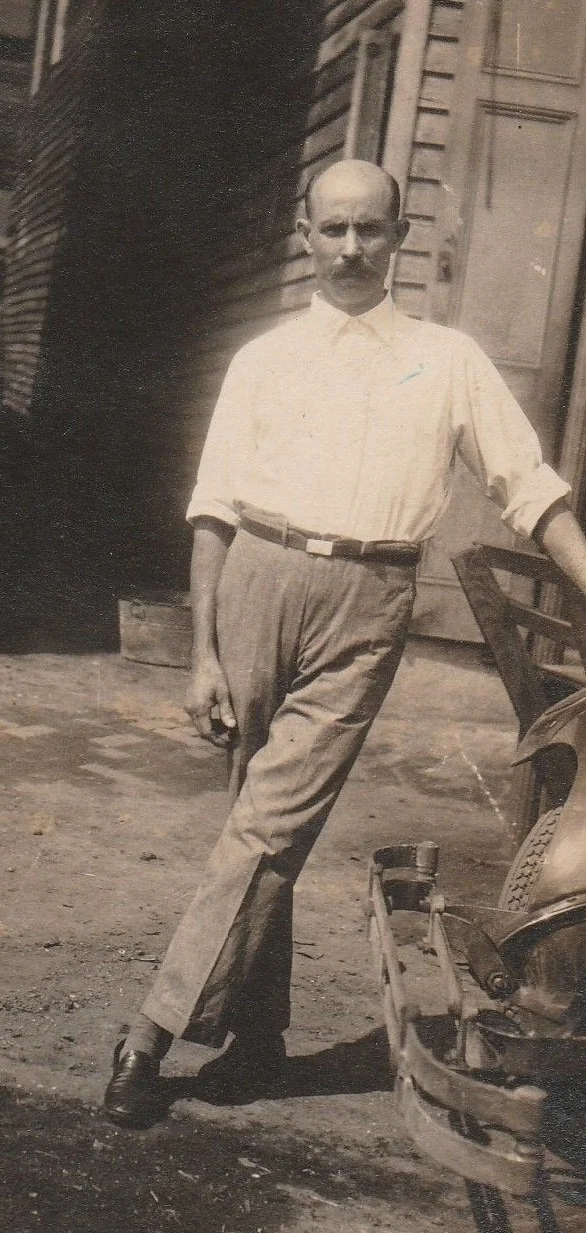
Pietro - Peter John Scalise

Maturana Family Strawberry Farm
Poppa Scalise’s path from his village of Piana dei Graeci led him through an “indenture” of a two-year contract to work Louisiana’s sugarcane fields, among thousands of Sicilian men who had been recruited to replace the labor shortage following the American Civil War. When he left his young bride, who was pregnant with their first child, the women of the village gossiped, “She’ll never see him again!“ Despite working from sunup to sundown in the sweltering heat of Louisiana’s cane fields, Pietro planted a vegetable garden, sold his produce to the plantation owners, and saved his profits. Finally, he sent for not only his wife and their young son, but also brought over her mother and father, brothers and sisters and even cousins who all stayed with the Scalise’s until they could establish their own independence. My paternal great-grandparents, Giorgio and Virginia Maturana became strawberry farmers in a Louisiana town north of New Orleans that was founded by Sicilian immigrants, called Independence.
After Pietro moved his family to New Orleans, he first sold produce from a wagon at the French Market in New Orleans, where there were so many Sicilian merchants, the area became known as “Little Palermo.” From his profits, Pietro invested in owning his first property and established the Scalise Grocery Store. Then he invested in other neighboring properties, which he named “The Peachtree”, The Lemon Tree” and “The Fig Tree”, and though each residential property was leased out, he always kept the “Picking Rights” for the produce he had planted there.
My maternal grandparents, following a similar path from the Town of Poggioreale in the Sicilian Province of Trapani, lived upstairs from their Accardo Grocery Store on the corner of Clio and Liberty Streets in New Orleans. With a streetcar stop on the corner, that property aside the streetcar tracks had no green space for planting. It wasn’t until a third of a century later, when their retirement in the late ‘40’s to their new home in the Lake Vista development near Lake Pontchartrain afforded them a garden for cultivating their vegetables and fruit trees. Poppa Giuseppe Accardo known for his green thumb, astounded neighbors with his bumper crop of tomatoes and peppers and growing aside his prized roses were rows of cotton which he planted just for show. In my memories of fabulous multi-coursed dinners enjoyed at my Grandmother Angelina’s dining room table, no meal can surpass a crisp hand-tossed salad, fresh-picked from their kitchen garden.
It was my Grandmother Angelina’s youngest sister, my Great-Aunt Rosie Canal, who each June invited all the children in our family for fig-picking at her grove on a dozen acres way out in New Orleans East. For as far as we could see there were towering trees, laden with ripe, rich figs. There were just so many that we could pick, with the ripest figs just out of our reach. By the time my oldest brother Jim was twelve (the one who became an architect), he figured out how to reach those luscious figs near the tops of the trees. His creation was a cigar box on a broomstick with a razor blade attached, ready to pluck the stems and allow the fruit to fall into his box. After picking, the figs were rinsed before being sorted for immediate consumption and for later canning. Nothing can compare to the mid-winter treat of unsealing those jars, absorbing the sweet cinnamon scent of plump, fully ripened figs, sealed in sugar syrup, and accented with a swirl of lemon peel.

SJA- Accardo-Canal-Roppolo
It wasn’t until after the passing of my maternal grandmother, Angelina Caronna Accardo, when my mother and I, and now my daughter, granddaughters and I continue the process of making our Sicilian fig-filled pastries, called “Cuccidati” - first by grinding the dried figs, then seasoning them with cinnamon, honey, orange zest and a pinch of black pepper. During that annual process I realized the connection of figs to our Festa di San Giuseppe celebrations. Among the many confections prepared for the March 19th feast, the bite-sized “Cuccidati” are usually everyone’s favorites.
In preparations for Saint Joseph Altars, I was fortunate to learn first-hand by watching the techniques of my Accardo grandmother how to carve elaborately designed fig-filled “Cuccidati”, each uniquely designed piece a testament to individual artistry, and each a manifestation of religious symbolism. As displayed on Saint Joseph Altars, there are Cuccidati representing La Sacra Famiglia - The Holy Family, with the Staff of Saint Joseph, the Sacred Heart of Mary and the Cross of the Risen Christ, among many other sacred symbols.
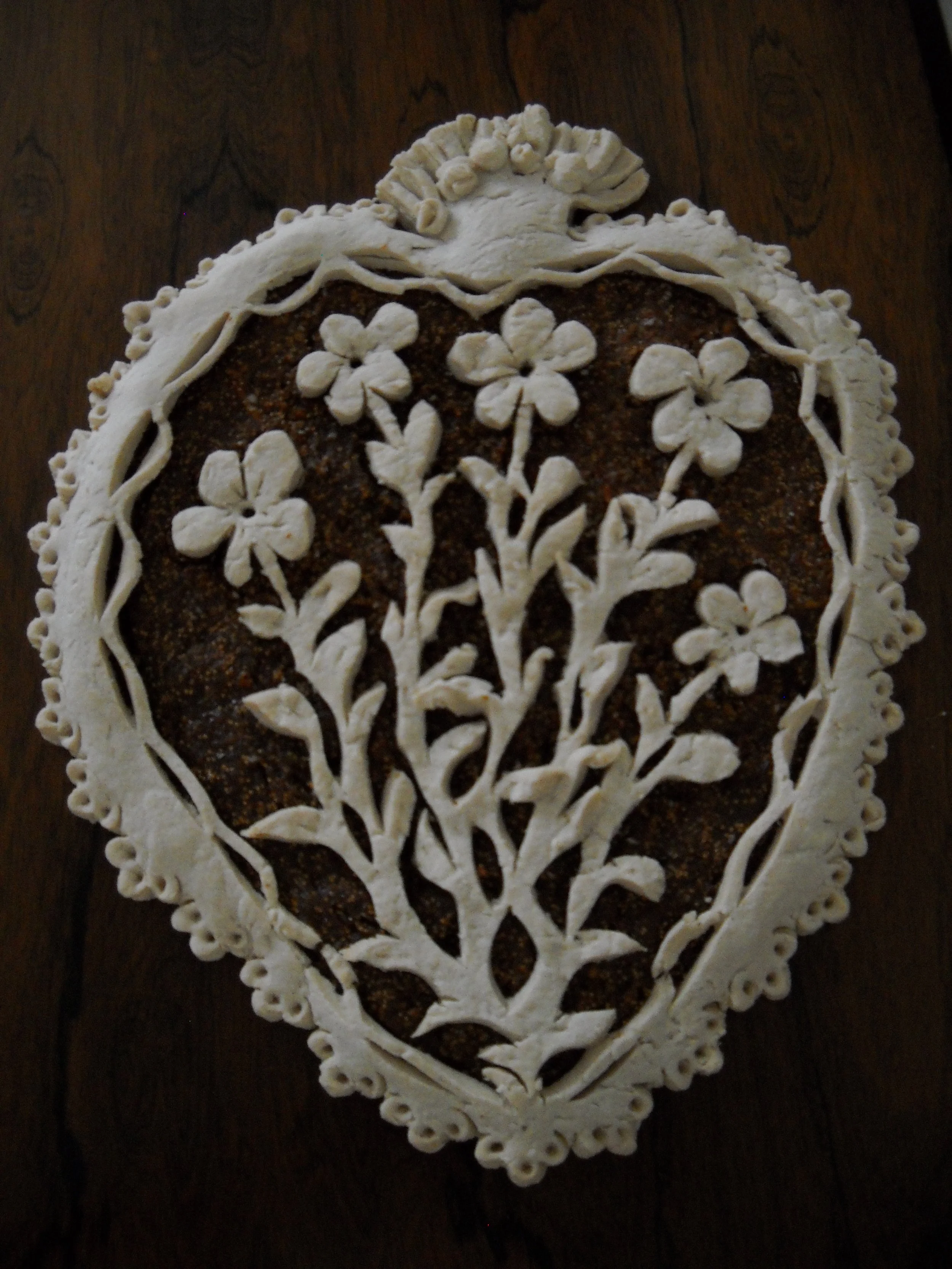
Sacred Heart of Mary Cuccidata
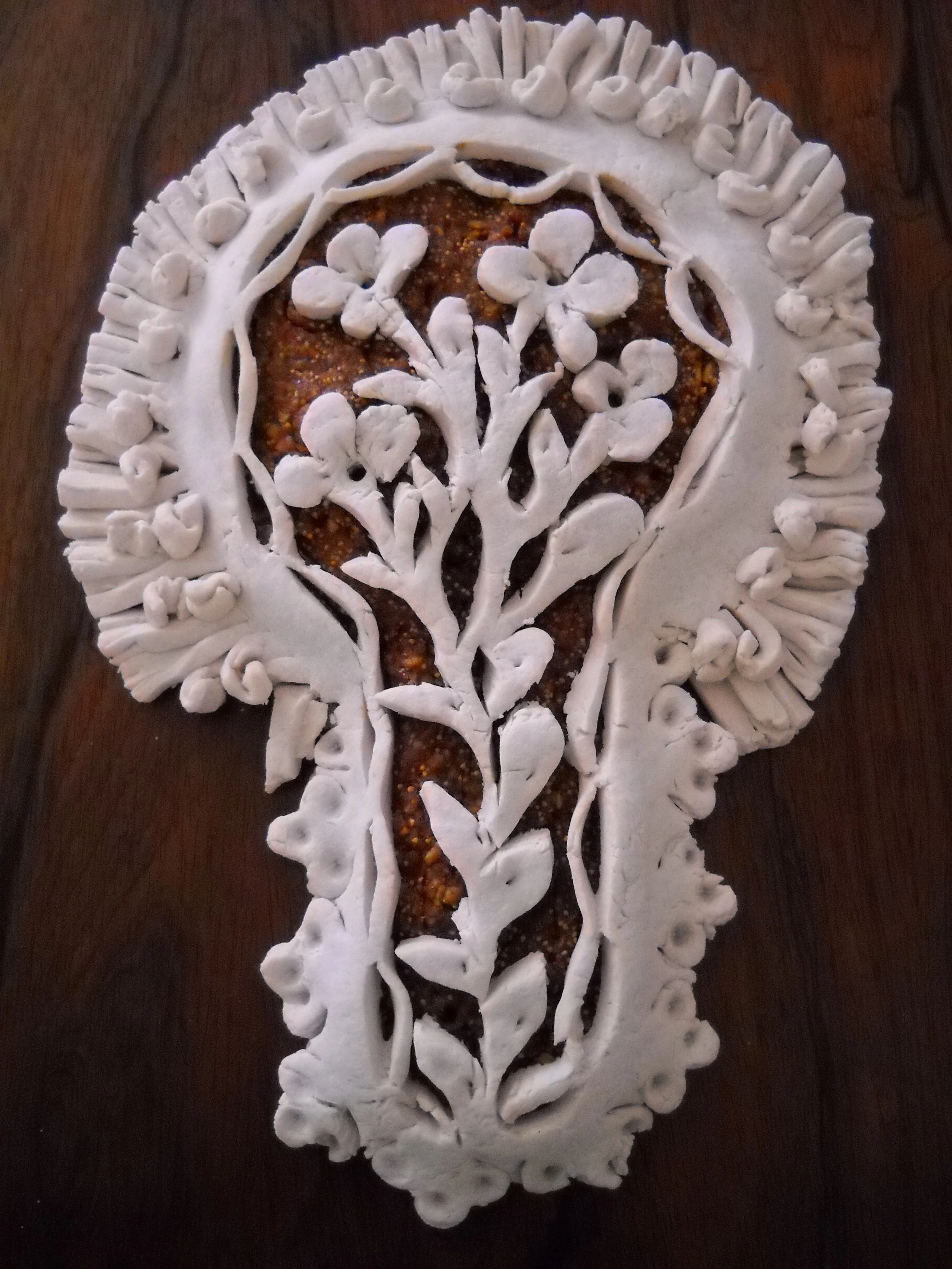
Cuccidata- The Palm
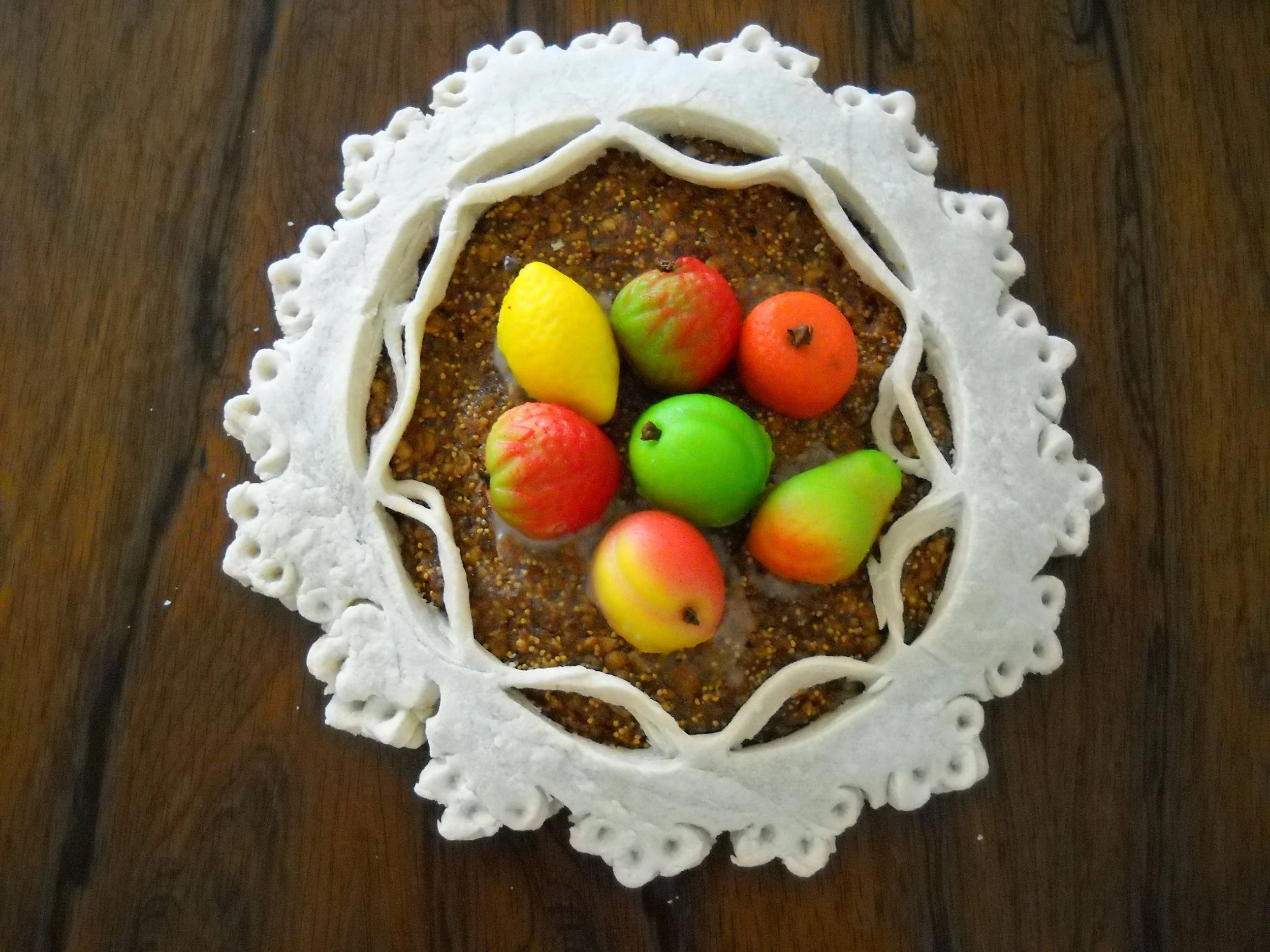
Fruit Plate- Abbondanza
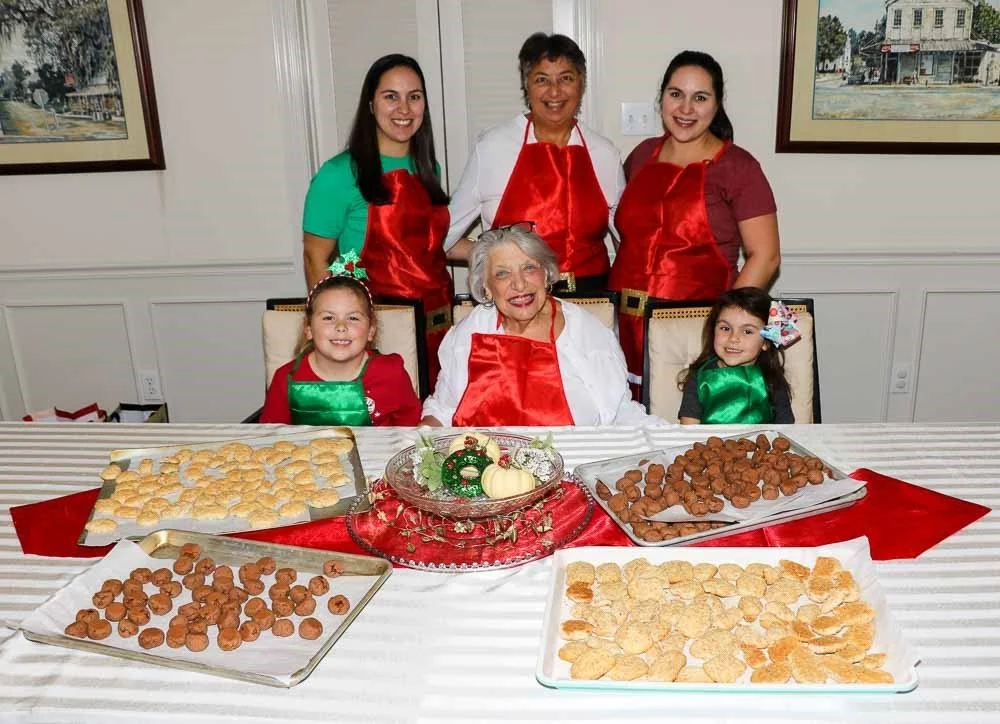
Now, when we gather for Holiday baking with four generations in my kitchen, while watching my great-granddaughters preparing our “Cuccidati” - six-year old Kira feeling the joy of hand-mixing the dough, nine-year old Julianna cutting individual cookies in precisely the way I have taught her and three-year old Valerie taking pride in sprinkling on the multi-colored sugar beads, there is an overwhelming sense of unbroken connection - of love and devotion brought home from Sicily.
About the author - Sandra Scalise Juneau

A native of New Orleans, Sandra Scalise Juneau, is a retired Banking Administrator, and as a Journalist and Culinary Arts Instructor, is dedicated to promoting awareness of local lore and culinary traditions. Influenced by the diversity of cultures in Louisiana and following her passion for the uniqueness of our regional cuisine, Sandra has taught classes to individuals and groups throughout the United States, from Seattle to Chicago and New York, and across the southern states to San Diego, California. Her features have been published in: Delectable Magazine; Inside Northside; Italian American Digest; Preservation, Journal of the Louisiana Landmarks Society; and Marquis Magazine.
For "Lagniappe", Sandra was privileged to learn first-hand from two Sicilian Grandmothers about the traditions and symbolism of food as art and has continued the tradition, focusing on the Sicilian Pastry Art of the Saint Joseph Altar as brought to Louisiana by Sicilian Immigrants. Sandra has created cultural exhibits of Saint Joseph Altars for public display for the Hallmark Card Company in New York, the 1984 Louisiana World’s Fair, The Louisiana Folk Life Festival in Eunice, Louisiana, The French Quarter Festival at the U.S. Mint, The Italian American Renaissance Museum and Library, and was a Project Curator for the Southern Food and Beverage Museum in New Orleans.
Often called on as a guest speaker, Mrs. Juneau has presented lectures to The International Association of Culinary Professionals, The American Association of Food Journalists, The Louisiana Breast Cancer Task Force, and the Italian Studies Programs at Southeastern Louisiana University in Hammond and Louisiana State University in Baton Rouge, and at Xavier University of Louisiana. Mrs. Juneau has been featured in numerous local and regional publications, including; Clarion Herald, New Orleans Magazine, The Baton Rouge Advocate, and Times Picayune, and was featured with Chef John Folse on LPBS, the Louisiana Public Television Broadcast production, Taste of Louisiana.
Her book, “Celebrating with St. Joseph Altars”, published by LSU Press in 2021 was sold out in the first six weeks, and now in Third Printing was listed on Amazon for two weeks as “The Number One New Publication in History, Culture and Religion.”. Sandra Scalise Juneau lives in Madisonville, Louisiana.
Here’s an Amazon link to “Celebrating with St. Joseph Altars”
Every year on March 19, Roman Catholic churches and households in and around New Orleans celebrate St. Joseph’s Day. As centerpieces of these celebrations, the elaborate tiered displays of foods, prayers, and offerings known as St. Joseph Altars represent a centuries-old tradition established in south Louisiana by immigrants from Sicily. In Celebrating with St. Joseph Altars, Sandra Scalise Juneau expertly documents the stories, recipes, and religious symbolism of this rich tradition passed down through multiple generations. While the altars have adapted over time to local ingredients and tastes, most of the customary dishes still follow cooking and baking methods that remain relatively unchanged from over a century ago. Juneau traces the history and symbols associated with the St. Joseph Altar from its Sicilian origins to its establishment among Louisiana’s celebrations, then its later embrace by multicultural communities across the United States. She also provides a guide for preparing an altar, complete with recommended timelines and suggestions for physical setup. She offers over sixty carefully selected recipes centered on delectable breads, fish, pasta, and spring vegetables. Pastries receive special attention, with detailed instructions for carving the intricate fig cake designs known as cuccidati. Celebrating with St. Joseph Altars chronicles a cultural tradition that continues to draw families and communities together in a generous spirit of hospitality. A native New Orleanian of Sicilian heritage, SANDRA SCALISE JUNEAU has created cultural exhibits for public display at the Hallmark Card Company in New York, the Louisiana World’s Fair, and the Louisiana Folklife Festival. St. Joseph Altars she designed remain on permanent exhibit at the Southern Food and Beverage Museum and the American Italian Cultural Center in New Orleans. She lives in Madisonville, Louisiana.
PRAISE FOR CELEBRATING WITH ST. JOSEPH ALTARS: “No one knows more about St. Joseph Altars than Sandra Scalise Juneau—the history, the religious significance, the cultural importance, and, of course, the food.” — Elizabeth C. Williams, cofounder of the Southern Food and Beverage Museum “Generations of Sicilian heritage have enriched the culture of New Orleans, and Sandra Scalise Juneau’s book explains the intricacies of these vital traditions, just as she has taught them in my home and at my restaurant.” — Chef Andrea Apuzzo, owner of Andrea’s Restaurant, Metairie, Louisiana.
For further info, Please See: Press Release from LSU Press
For anyone who may wish to purchase a personally signed copy of my book, "Celebrating with St. Joseph Altars:, orders may be sent to me via email: 1ssj@att.net, or Tel: 985-630-8017
The cost for the book, including US Postal Service Priority Shipping is $50 ( Anywhere in the US)
Orders should include:
Name of Recipient
Shipping Address
Contact Info - Tel & Email
Name(s)for inscription
Payment can be sent by VENMO to : @Sandra-Juneau
Or check, payable to : Sandra Scalise Juneau
Mailed to: 517 Garden Lane, Madisonville LA 70447